
Carrots & HP Active Trial
Programme For Compost / Humus
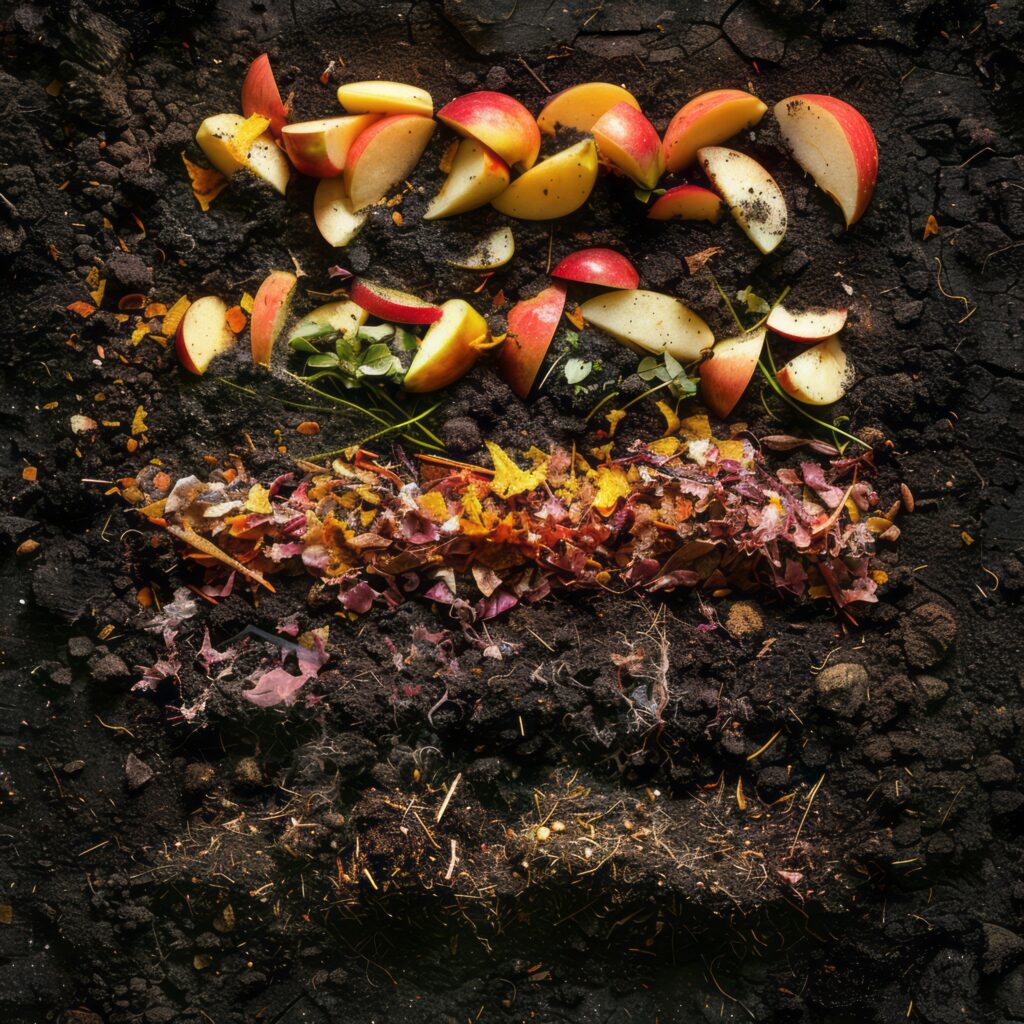
In order to utilize all vegetable matter and some animal waste in compost making, it is essential to ensure that the proper aerobic, anaerobic and potential activators as well as the necessary acids and tannins are processed in a shortest time as possible to ensure that the final product nourishes and supports the micro organism in the soil that in turn will provide the necessary life giving nourishment to the plants in addition to maintaining a proper aerated and easily manageable soil.
Preparation
Windrows, should be made in the height and width that can be manage by a good mechanical mixer, that can also apply at the same time, the water and bacterial activator to each row.
The length of the windrow is determined by the length of the area where the windrow is located.
In the case of multiple rows, the rows should be kept at least three meters apart.
Prior to making the windrow, all waste with the diameter or length bigger than 2cm should be chipped and event trunks of trees up to 12cm should be chipped.
Trunks bigger than 15cm in diameter are already very dry therefor lacking tannin. Suitable for fire wood.
Once the windrow is made it should be turned regularly and Bio Terra I and Bio Terra II applied as follows:
If adding animal compost: 120kg or 20% per m3 is sufficient.
Product
We believe in ethical, sustainable farming that prioritizes the well-being of our animals and the health of our planet. That's why we offer a range of premium organic animal products, from pasture-raised beef and poultry to creamy dairy and free-range eggs. Our commitment to organic practices means no antibiotics, hormones, or harmful pesticides, ensuring you receive only the purest, most flavorful products. We work directly with local farmers who share our values, fostering a transparent supply chain and delivering wholesome.
Pre Mix
Mix 50ml Bio Terra I and 10ml Bio Terra II per m3 in 10 parts of water and activate with compressed air.
Add this pre mix to 30 liters of water per m3 and apply as per the following programme:
- 1st Application – 1 week after windrow has been laid in the sun
- 2nd Application – 1 week later
- 3nd Application – 1 week later
- 4nd Application** – 1 week later
Now let the windrow rest for two weeks and sift. The sifted material is ready to be fed to the ground and the larger part that did not go through the sifting process will go back to stage one as starting material.
Once you have this process in operation the application of 7 to 12 tons of this product per Ha will be sufficient for all your farming needs.
The following is a laboratory analysis of a treated humus by this process. Laboratory analysis of garden waste matter treated with Bio Terra I and Bio Terra II according to our programme shows the following:
| Lab No | Ref No | % N | % P | % K | % Ca | % Mg | Na mg/kg | % S | Cu mg/kg | Fe mg/kg | Mn mg/kg | Zn mg/kg | B mg/kg | Mo mg/kg | % C |
|---|---|---|---|---|---|---|---|---|---|---|---|---|---|---|---|
| 10.290 | 3 | 9,00 | 2,00 | 41,00 | 202,00 | 33,00 | 265 | 19,00 | 41 | 4.580 | 417 | 102 | 3 | 38,00 | 6,00 |
This result was achieved within 84 days of treatment.
* Kelp is a different kind of seawood. In Bio Terra, a unique type of seaweed is used: Ascophyllum Nodesem
** This programme with 4 applications is the most intensive. A more regular use is only 1 liter premix Bio Terra I and II per m3 starting material (see user label)